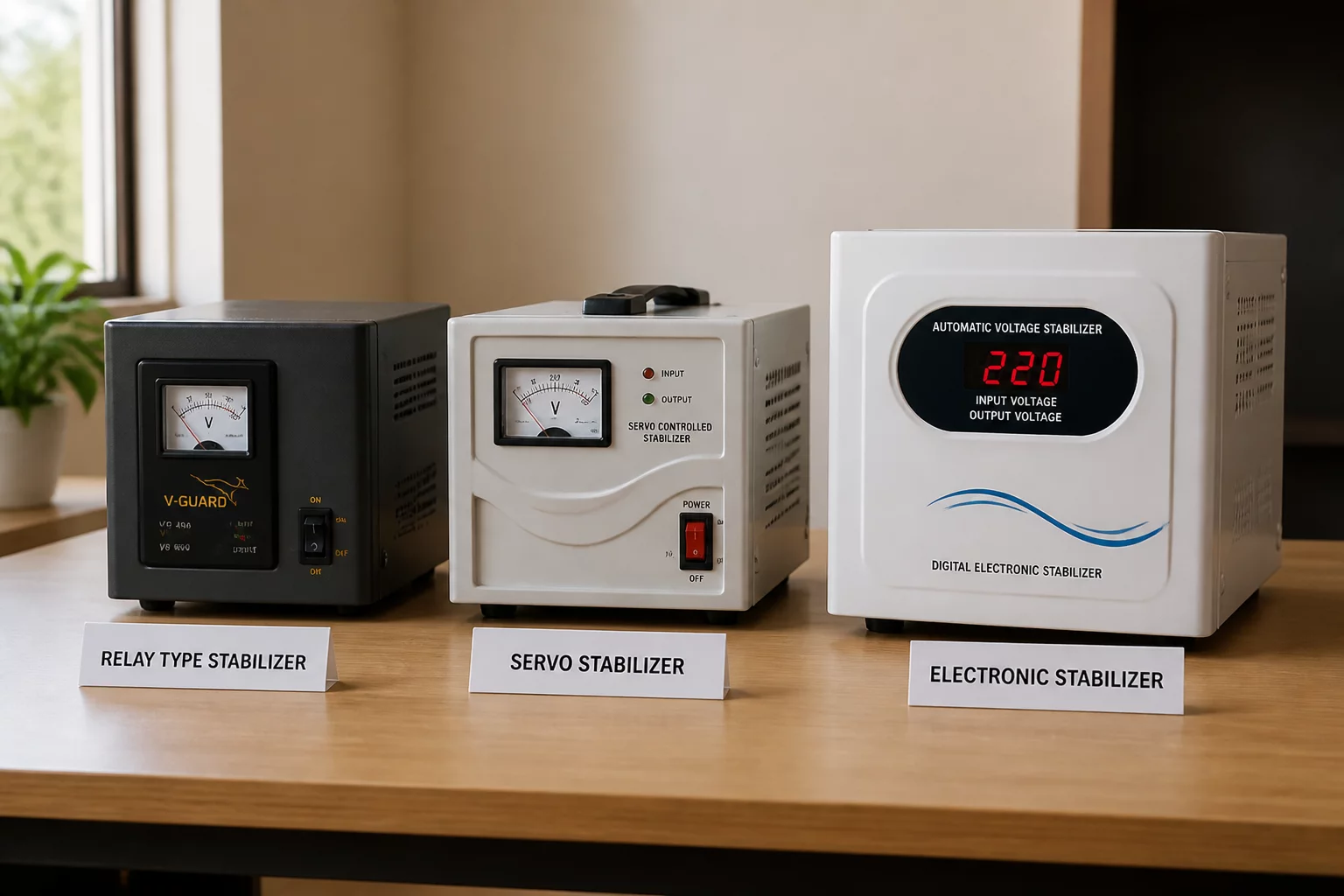
Choosing the correct voltage stabilizer requires matching the exact electrical load profile of your equipment with the correct regulation technology, response speed, and safety tolerance thresholds.
Executive Summary & Key Takeaways
- Calculate total continuous load plus inductive surge startup requirements (typically 2.5x to 3x nominal wattage).
- Select electronic relay or servo-driven stabilization based on precision requirements and switching speed demands.
- Ensure integrated high-voltage cutoff and thermal protection circuits are present to safeguard against extreme surges.
Sizing Your Stabilizer: Continuous Load and Inrush Current
The foundation of proper stabilizer selection begins with determining your real-world power demands. Every connected appliance consumes nominal operating power, but motor-driven devices like compressors, pumps, and refrigerators demand sudden inrush spikes during startup. Neglecting these initial power surges inevitably leads to stabilizer overload, frequent tripping, or premature component failure.
To calculate adequate capacity, tally the continuous wattage of all active circuits and add a safety reserve margin of at least twenty to thirty percent. For installations powering heavy industrial machinery or multiple refrigeration units, sizing the stabilizer for high instantaneous current headroom prevents sudden voltage drops across adjacent circuits.
A stabilizer without sufficient headroom is like a fuse waiting to blow. Always design with at least twenty-five percent spare capacity above peak theoretical consumption.
— Michael Brown, Senior Electrical Systems EngineerTechnology Types: Relay, Servo, and Solid-State Systems
Voltage stabilizers operate through distinct regulation mechanisms, each engineered for specific grid conditions and equipment sensitivity profiles:
- Relay-Controlled Stabilizers: Utilize automated electronic switching across transformer taps, offering rapid response times and cost-effective defense for everyday residential appliances.
- Servo-Driven Motor Stabilizers: Feature motorized continuous autotransformers delivering high output precision (±1%), ideal for sensitive medical instruments, laboratory gear, and high-fidelity electronics.
- Static Solid-State Units: Employ microprocessors and SCR/triac solid-state circuitry for silent, instantaneous microsecond corrections without moving mechanical components.
Assess your local utility stability before choosing a technology type. In regions with persistent severe voltage dips, wide input range stabilizers ensure continuous output regulation without constantly severing power supply.
Engineering Feedback & Discussion
Verified insights and electrical safety inquiries from professionals.
John D.
Verified Industrial ClientFacilities Technician • 08/26/2026
Reliable Sizing Guidance
Great guide, very helpful!
Submit Technical Comment
Share your voltage stabilization experience or ask grid protection questions.